What form does the outer coil stainless steel tower support adopt
Source:
Release date: 2026-09-28
Information summary:The stainless steel tower with outer coil tube belongs to a vertical tower with heat exchange jacket load. The selection of supports is determined based on the tower height, height to diameter ratio, total weight, wind and seismic loads, and the space of the outer coil tube insulation layer. It is divided into the following four categories: high and large distillation absorption towers prioritize
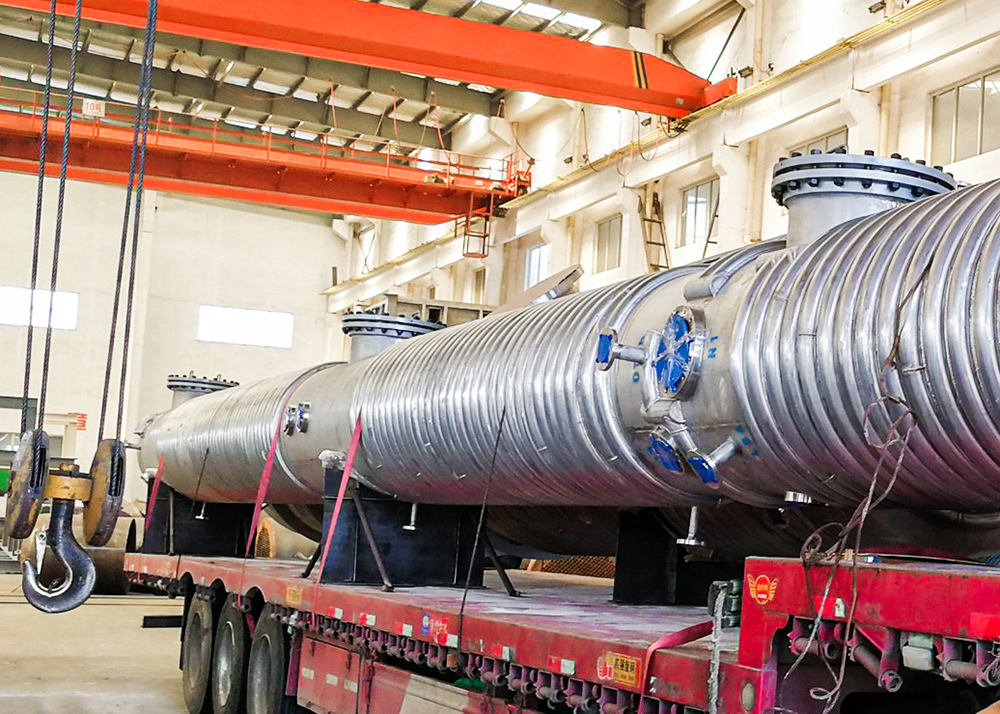
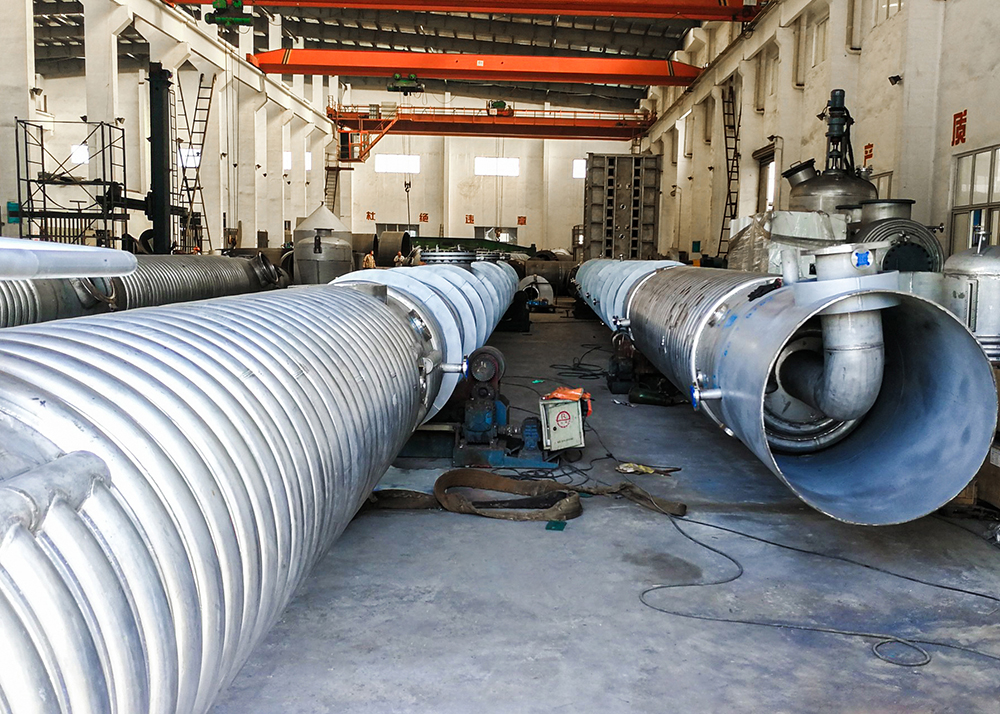
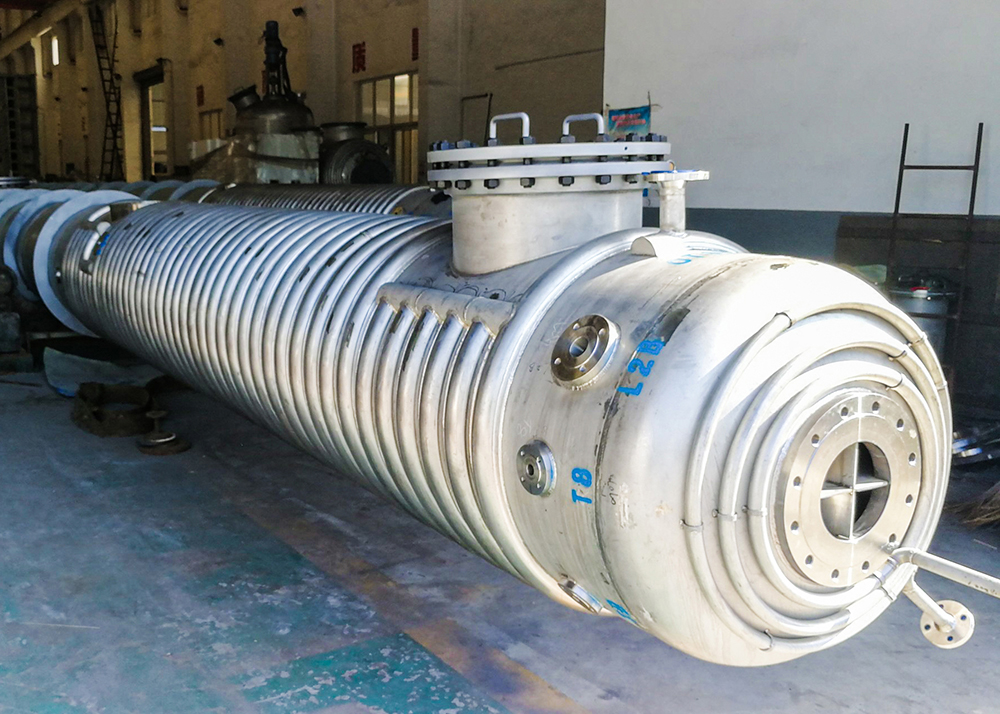
The stainless steel tower with outer coil tube belongs to a vertical tower with heat exchange jacket load. The selection of supports is determined based on the tower height, height to diameter ratio, total weight, wind and seismic loads, and the space of the outer coil tube insulation layer. It is divided into the following four categories: high and large distillation absorption towers prioritize skirt supports; Leg/ear supports are selected for small and medium-sized low towers:
1. Skirt support (for tall towers, cylindrical shape is preferred, and for extra large height to diameter ratios, conical skirt support is optional)
Stainless steel towers with high aspect ratio, large total weight, and significant wind and seismic loads are generally equipped with cylindrical skirts; Composed of skirt cylinder, foundation ring, and anchor bolt seat. The load is evenly transmitted along the circumference and has good anti overturning performance.
Attention to the outer coil: The connection position between the skirt and the cylinder should avoid the outer coil to prevent interference between the coil and the skirt; The top of the skirt is equipped with exhaust holes and the bottom is equipped with drainage holes; Stainless steel pads are installed between the support and the cylinder to isolate dissimilar metals and prevent electrochemical corrosion; Local stress verification of stainless steel cylinder body to avoid local yielding of cylinder wall caused by the superposition of coil load.
2. Leg support (supporting legs, small and medium-sized low towers)
External coil tube towers with low tower height, small diameter, and light weight are generally equipped with 3-4 evenly arranged round tubes/steel support legs.
Key points of the outer coil tube: the welding position of the support legs should avoid the outer coil tube pipeline; Add thickened pads at the welding position of the cylinder to disperse local stress; The height of the support legs should not be too high to prevent insufficient resistance to overturning; The support leg material can be carbon steel, but a stainless steel isolation pad must be added to prevent galvanic corrosion caused by direct contact between carbon steel and stainless steel cylinder.
3. Ear support (suspension support, platform floor installation, small and medium-sized tower)
When the equipment is supported on a steel structure platform, it is selected in short arm A type and long arm B type. When space needs to be reserved for the outer coil tube and insulation layer, long arm ear seats are selected, symmetrically arranged at 4 points.
Key points of the outer coil: avoid the welding area of the ear socket from the coil; The cylinder must be equipped with a cushion plate to prevent the thin-walled stainless steel cylinder from being locally pulled apart by the support; Verify the additional load caused by the alternating cold and heat of the outer coil medium.
4. Rigid ring support (alternative for thin-walled cylindrical heavy equipment)
When the thickness of the cylinder wall is thin and the load on the outer coil is large, and the local stress exceeds the standard, a continuous rigid ring is added to the outside of the cylinder, and the support load is transmitted to the rigid ring to protect the welding area between the cylinder wall and the outer coil.







 Service Hotline

 Hotline:0512-52093708
 E-mail:
 Address:No. 101, Taojia Bridge, Dahe Village, Shanghu Town, Changshu City, Suzhou City, Jiangsu Province


 Add wechat
 Contact us
 Telephone